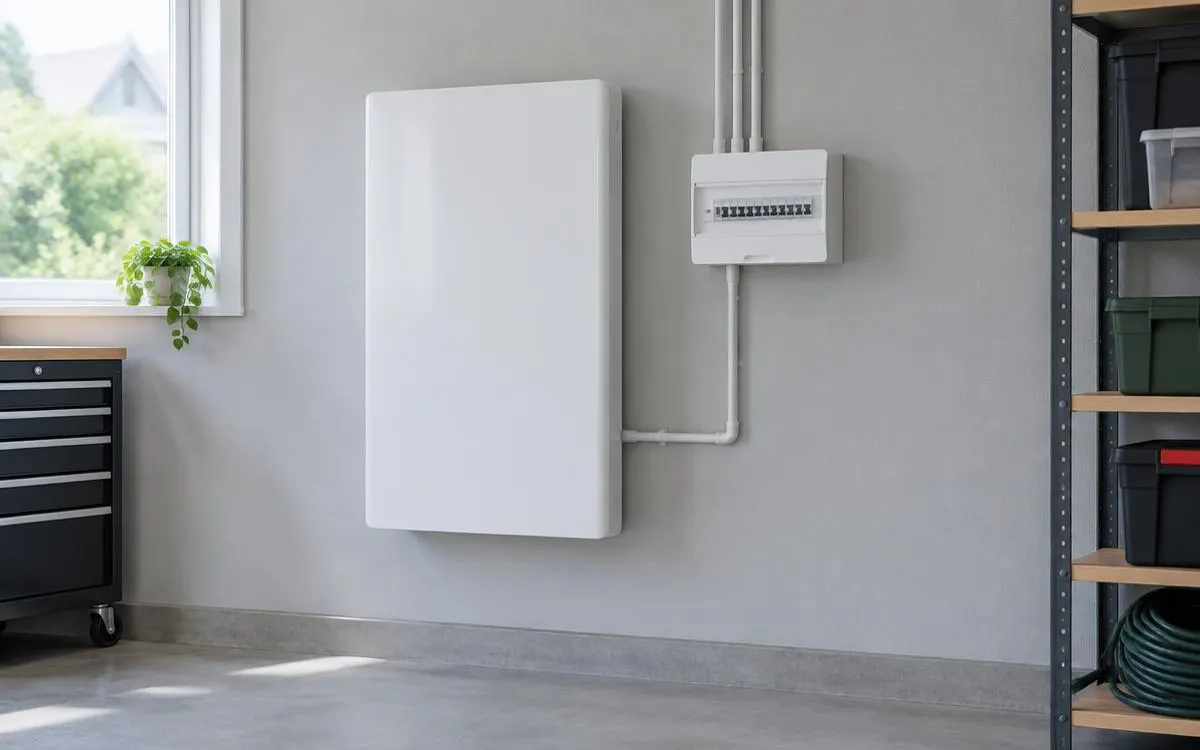
No official UK dataset of home battery prices exists, so we do not publish an average price. This guide explains what you pay for instead, so you can read an itemised quote with confidence. It covers equipment, installation, safety work, VAT and funding. Use it alongside written quotes from MCS-certified installers.
For the broader overview, read our guide: Grid Energy Storage.
Independent guide. We are not a lender or a government body. Always check current scheme rules with the official provider.
1. Know the cost components
A battery quote covers more than the battery unit. Each item below can change the total, and installers group them differently. Ask for every item as a separate line so you can compare quotes fairly. Question any line you do not understand before you sign.
Some installers bundle several items into one price, which makes comparison harder. A bundled quote is not wrong, but it hides where the money goes. Ask for a breakdown even if the installer prefers a single figure. Check that each quote covers the same capacity, location and equipment before you compare totals.
| Component | What it covers | What to ask |
|---|---|---|
| Battery | The storage unit and its built-in management system | Usable capacity and warranty terms |
| Inverter or hybrid inverter | Converts and controls power between battery, solar and home | Whether existing equipment is reused |
| Installation labour | Mounting, cabling and connection | Who carries out the work |
| Electrical work | Consumer unit or wiring changes | Whether upgrades are needed |
| Siting and fire safety | Location, separation, ventilation and detection under PAS 63100 | Where the battery will go and why |
| Commissioning | Set-up, testing and app connection | What the handover includes |
| Network notification | Telling or applying to the network operator | Who handles it and when |
2. Understand what moves the price
Capacity is the biggest driver, because a larger battery uses more cells. Power rating also matters, because it decides how quickly the battery charges and discharges. Coupling changes the equipment list. A DC-coupled battery usually shares a hybrid inverter with solar panels, while an AC-coupled battery has its own inverter.
Your home's layout also affects cost. PAS 63100 says batteries are best sited outdoors where practicable, and indoor locations need fire separation and ventilation. A suitable location close to the consumer unit can reduce cabling. A difficult location can add building and electrical work.
Existing equipment changes the quote too. Some homes can reuse a solar inverter, while others need a hybrid inverter or extra controls. Ask each installer to explain whether they reuse or replace equipment and why. A cheaper quote that leaves out necessary safety or electrical work does not save you money. Compare the full scope of work before you compare totals.
3. Check VAT and funding
HMRC zero-rates batteries installed in homes for VAT from 1 February 2024. This applies whether the battery is retrofitted to solar, stores grid electricity on its own, or both. The temporary zero rate runs until 31 March 2027. Check that your quote shows VAT correctly.
The Warm Homes Loan has a battery maximum of £15,000, separate from the solar maximum. Full eligibility and application details are not yet confirmed. Eligible households in England can ask their council about the Warm Homes: Local Grant, which includes battery storage within up to £15,000 of energy performance measures.
- Check your nation and eligibility for funding.
- Ask two or three MCS-certified installers for itemised quotes.
- Compare each line, not only the total.
- Confirm VAT treatment and any funding deduction in writing.
Checklist
- I understand why no official average price is published.
- My quote lists each component separately.
- I know where the battery will go and why.
- My quote shows VAT at the zero rate where it applies.
- I have checked loan and grant options.
Frequently asked questions
What is the average cost of a home battery?
No official UK dataset of home battery prices exists, so we do not publish one. Compare itemised quotes from MCS-certified installers instead.
Do I pay VAT on my home battery?
Batteries installed in homes are zero-rated for VAT until 31 March 2027, under HMRC guidance.
Can I borrow for my battery under the Warm Homes Loan?
The Warm Homes Loan has a battery maximum of £15,000. Full eligibility and application details are not yet confirmed.
Why does my quote include fire-safety work?
PAS 63100 sets fire-safety rules for home batteries, including siting, separation and detection. Ask the installer which rules apply to your chosen location.
Does adding a battery to my existing solar cost more?
It depends on whether your inverter can be reused. Ask installers to explain the equipment they propose and why.
So you can read a battery quote line by line and check VAT and funding before you commit.
WHLS Editorial Team
Our editorial team writes independent, plain-English guides on home energy finance. We review guides when scheme rules change.
References
- HMRC – VENSAV3061: batteries (opens in a new tab)
- BSI – PAS 63100:2024 (opens in a new tab)
- MCS – MIS 3012 battery installation standard (2025) (opens in a new tab)
- GOV.UK – Notice of approved grant categories and values for the Boiler Upgrade Scheme (opens in a new tab)
- Energy Saving Trust – Boiler Upgrade Scheme (opens in a new tab)
- MoneySavingExpert – Warm Homes Loan Scheme news (October 2026) (opens in a new tab)
- Financial Conduct Authority – Financial Services Register (opens in a new tab)
- MCS – Find an installer (opens in a new tab)
- Energy Saving Trust – Warm Homes: Local Grant guide (opens in a new tab)