Professional installation and careful use are the starting points for home battery safety. This guide is for owners checking their responsibilities and the response to physical warning signs. It covers siting, clear surroundings and emergency boundaries without providing electrical repair instructions. Follow the actual product manual and installer advice, and put personal safety before collecting fault information.
For the broader overview, read our guide: Lithium-ion Technology.
Independent guide. We are not a lender or a government body. Always check current scheme rules with the official provider.
1. Agree professional installation and safe surroundings
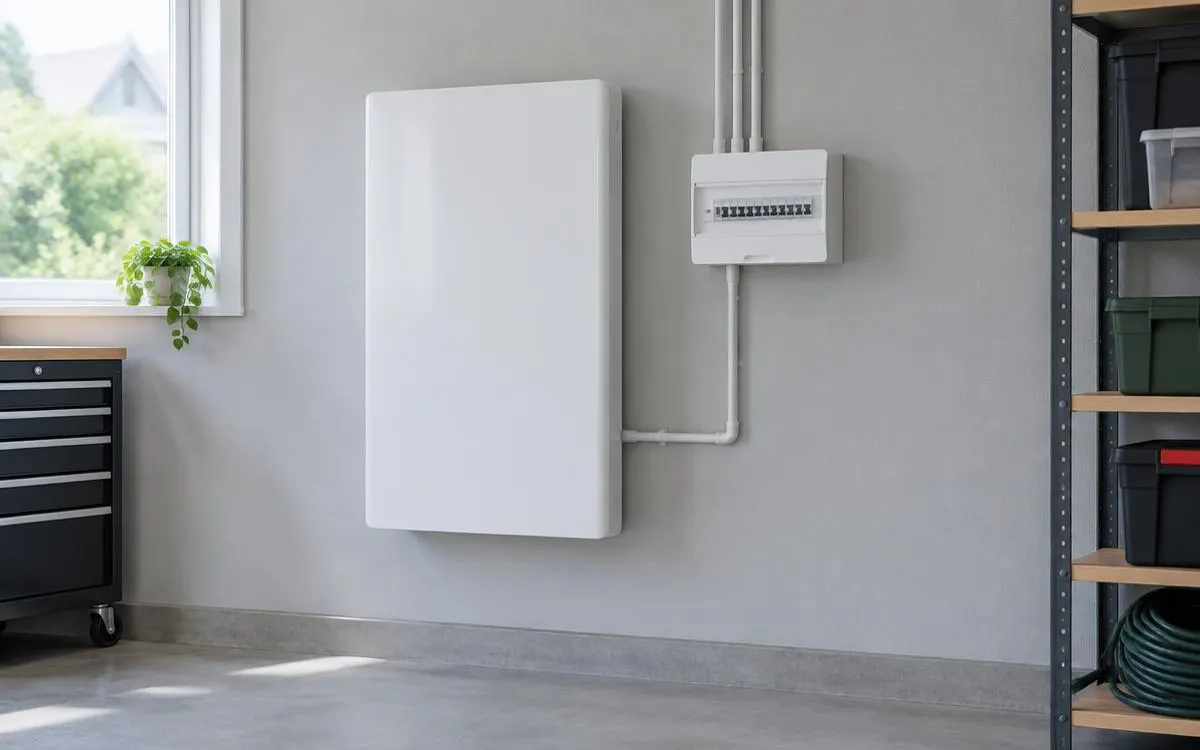
A qualified installer should assess the battery position against the product instructions and applicable installation requirements. Ask how the design keeps equipment away from escape routes and inappropriate heat sources. Ventilation, access and nearby materials need assessment for the actual enclosure and location. Do not assume an indoor or outdoor label makes every position suitable. Request a written explanation of the agreed siting and keep the area available for authorised inspection and support.
Keep stored items clear of the enclosure and do not cover ventilation openings or access points. Tell the installer about building changes, nearby heaters, water exposure or altered room use. Do not move the battery yourself or change its mounting arrangement. Ordinary household care should follow permitted external instructions only. Never add a cover, improvised cooling device or other modification because online advice claims it improves protection. The installation needs to remain within its approved design.
2. Never open or modify the battery
Do not open the enclosure, handle internal cells or alter electrical connections and protective controls. Leave installation, diagnosis and repairs to qualified professionals using approved instructions. An integrated management system helps supervise operation, but it does not make damaged equipment safe to approach. Use the app or accessible display only when this can be done safely. Record ordinary alerts and contact the installer instead of repeatedly resetting the unit to hide a warning.
Swelling, unusual heat, a strong unfamiliar smell, hissing or smoke require you to move away and stop using owner troubleshooting steps. Do not touch the unit to test its temperature or attempt to move it. Keep other people clear of the affected area. Never approach it for a photograph, serial number or final app reading. Physical warning signs take priority over gathering evidence, saving stored energy or trying to restore household operation.
3. Respond safely and arrange professional disposal
Leave the area and call 999 if there is fire or smoke. Do not open, reset, move or attempt to repair the battery. Follow emergency instructions and contact the installer only once you are safe. Do not return to the equipment to inspect damage without appropriate professional guidance. For other physical warning signs, remain clear and seek urgent professional advice through the established support route. This guide does not provide firefighting instructions or a DIY isolation procedure.
Arrange unwanted, failed or end-of-use equipment through the installer or manufacturer’s take-back process. Ask how the unit will be assessed, collected and handled without transporting or dismantling it yourself. Do not place a home storage unit in household rubbish or improvise disposal of its cells. Keep disposal information with the warranty and support documents before it is needed. A damaged battery requires specific professional arrangements, so describe its condition from existing safe observations and follow the approved collection instructions.
Checklist
- I have an assessed position away from escape routes and heat.
- I keep access and ventilation clear.
- I never open or modify the equipment.
- I move away from physical warning signs.
- I leave and call 999 for fire or smoke.
- I arrange disposal through professional support.
Frequently asked questions
Can I open my battery to check damaged cells?
No. Do not handle internal components or attempt repair. Move away from warning signs and contact qualified support from a safe position.
What should I do if my battery is swelling or hissing?
Stop troubleshooting and keep clear of the affected area. Seek urgent professional advice. Leave the area and call 999 if there is fire or smoke.
Should I take a photo of my smoking battery for the installer?
No. Do not approach unsafe equipment to collect evidence. Leave the area, call 999 and contact the installer once you are safe.
How should I dispose of my home battery?
Use the installer or manufacturer’s take-back route. Do not dismantle, transport damaged equipment yourself or put the unit in household rubbish.
So you can recognise unsafe conditions and use professional support without attempting hazardous battery handling or repairs.
WHLS Editorial Team
Our editorial team writes independent, plain-English guides on home energy finance. We review guides when scheme rules change.
References
- Energy Saving Trust – Energy storage (opens in a new tab)
- GOV.UK – Domestic battery energy storage systems safety review (opens in a new tab)
- Energy Saving Trust – Off-grid (opens in a new tab)
- GOV.UK – Notice of approved grant categories and values for the Boiler Upgrade Scheme (opens in a new tab)
- Energy Saving Trust – Boiler Upgrade Scheme (opens in a new tab)
- MoneySavingExpert – Warm Homes Loan Scheme news (October 2026) (opens in a new tab)
- Financial Conduct Authority – Financial Services Register (opens in a new tab)
- MCS – Find an installer (opens in a new tab)
- Energy Saving Trust – Warm Homes: Local Grant guide (opens in a new tab)
- Home Energy Scotland – Grants and loans (opens in a new tab)
- MCS – Home Energy Scotland Grant and Loan (opens in a new tab)
- Energy Saving Trust – Welsh Government Nest scheme (opens in a new tab)
- Energy Saving Trust – Consumer protection (opens in a new tab)
- RECC – Renewable Energy Consumer Code (opens in a new tab)
- HIES – Home Insulation and Energy Systems (opens in a new tab)