Home batteries must follow fire-safety, electrical and grid connection rules. This guide summarises the main standards in plain English so you can ask informed questions. It covers where a battery can go, who can do the electrical work and how the network operator is involved. Your installer handles compliance, but you should know what to expect.
For the broader overview, read our guide: Residential Battery Options.
Independent guide. We are not a lender or a government body. Always check current scheme rules with the official provider.
1. Follow fire-safety and siting rules
PAS 63100:2024 sets fire-safety requirements for home battery systems. BSI published it with DESNZ sponsorship, and it has been in effect since 31 March 2024. Batteries are best sited outdoors where practicable. Indoor locations need fire separation and ventilation, and batteries in rarely visited spaces need an interlinked smoke or multi-sensor detector.
| Location | Allowed? | Condition |
|---|---|---|
| Outdoors | Preferred where practicable | At least 1 metre from escape routes, doors, windows and vents |
| Bedrooms or rooms where people sleep | No | Not permitted |
| Escape routes such as landings, stairs and corridors | No | Not permitted |
| Lofts, voids and roof spaces | No | Not permitted |
| Near flammable materials or fuel tanks | No | Not within 2 metres |
| Cellars | Only with outside access | Not permitted without outside access |
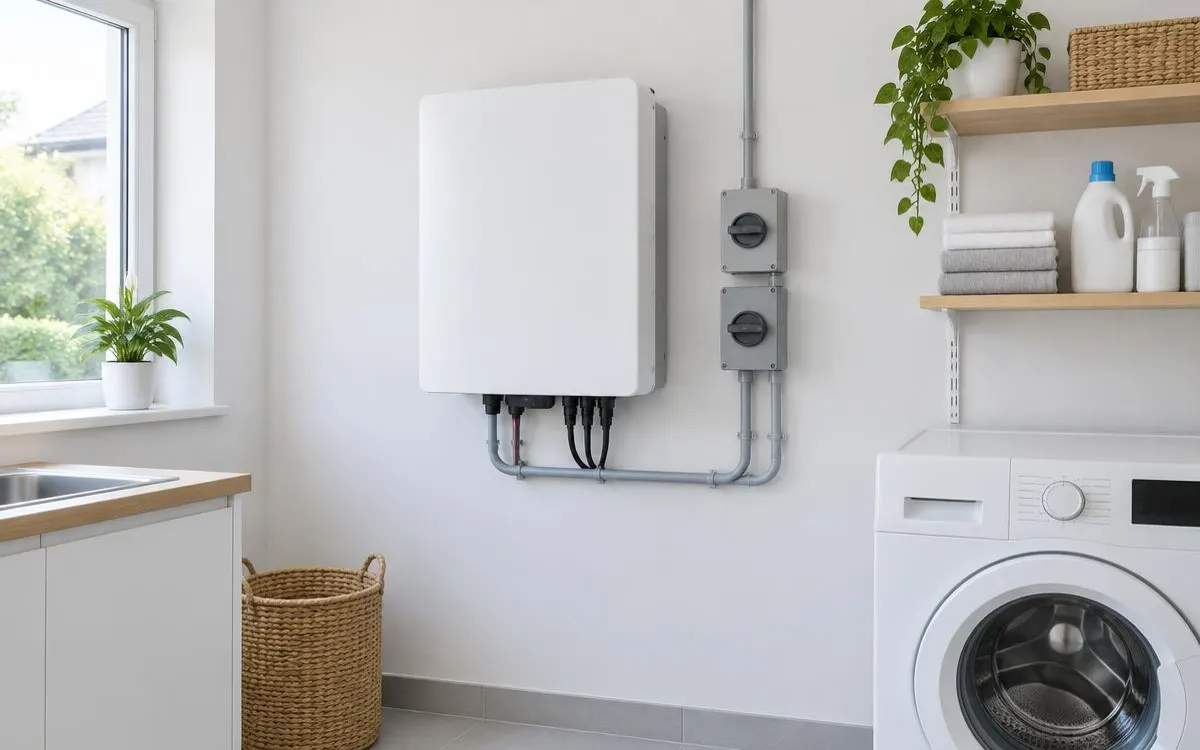
| Other indoor rooms | Yes, with conditions | Fire separation and ventilation required |
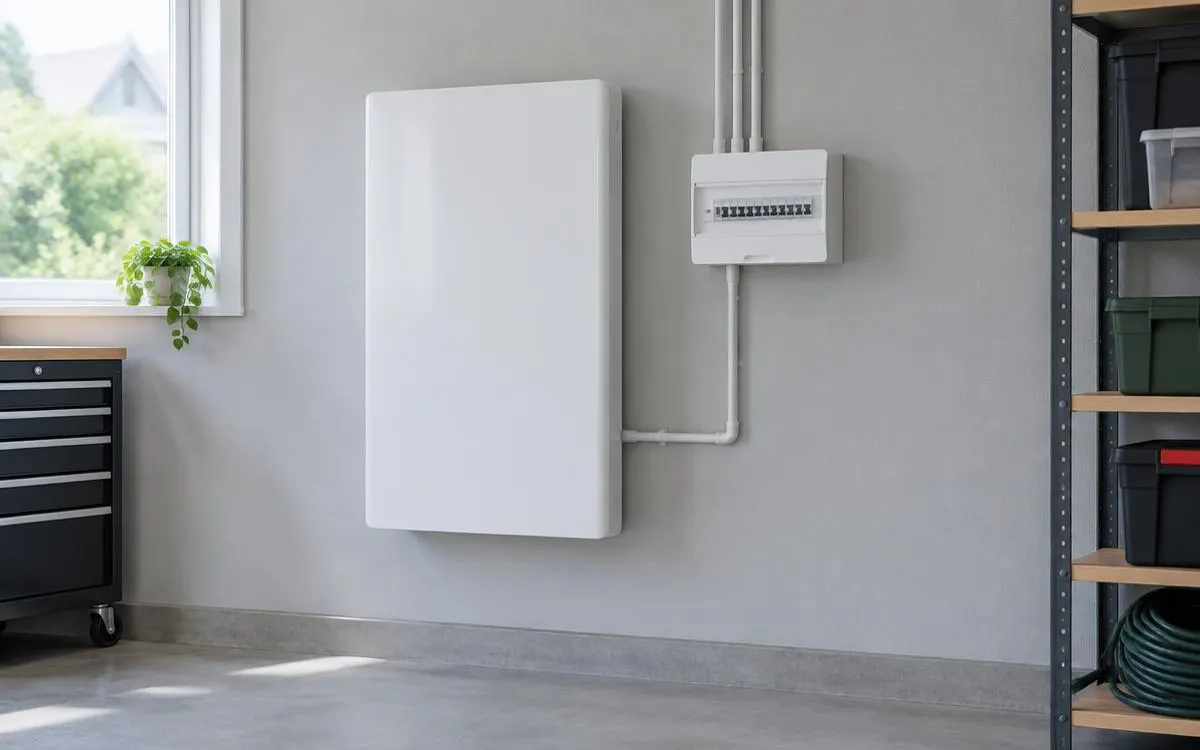
PAS 63100 also limits size. No single battery enclosure may exceed 20 kWh. The total per home is capped at 40 kWh, or 80 kWh if the batteries are outdoors, in an outbuilding or in a suitably fire-separated garage.
2. Check electrical and installer standards
BS 7671:2018+A4:2026 is the latest amendment to the IET Wiring Regulations. It adds a new chapter on stationary secondary batteries, and the previous version was withdrawn on 15 October 2026. Building Regulations Part P covers fixed electrical work in homes. A registered competent-person installer can self-certify that work.
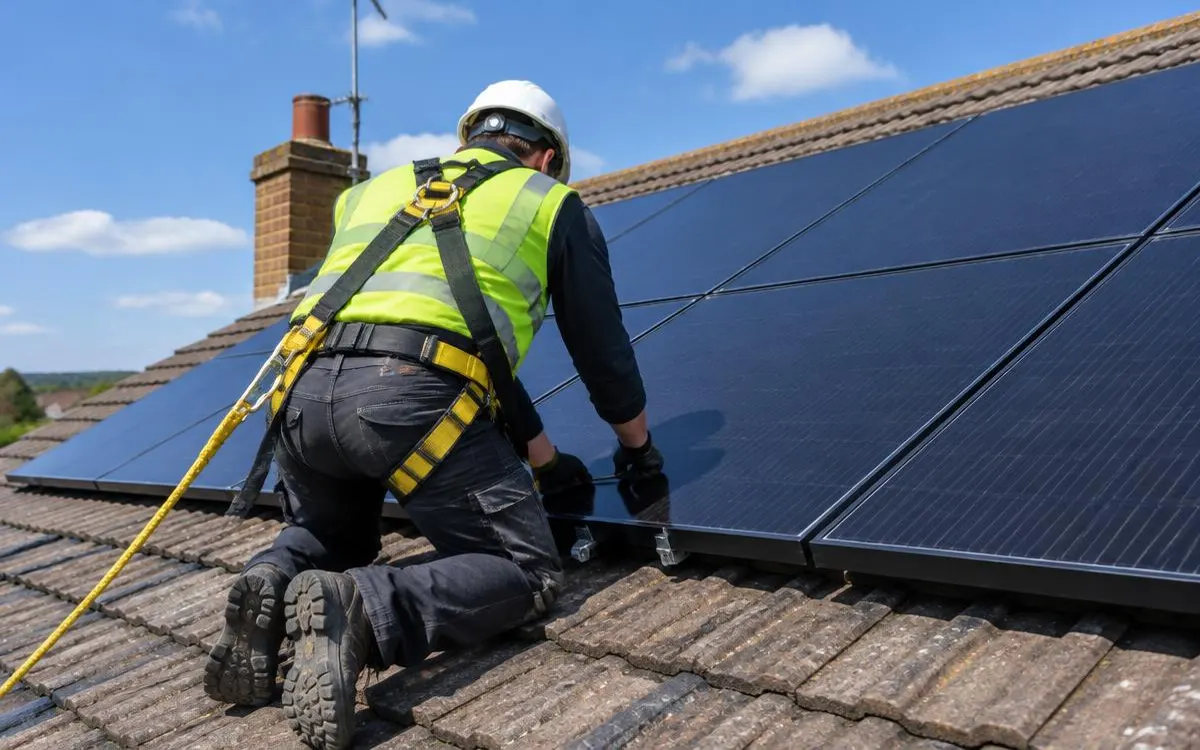
MCS sets its own battery installation standard, MIS 3012, in a 2025 version. Choosing an MCS-certified installer means they work to this standard. Ask for the electrical certificate and MCS documents at handover.
Keep these documents with your home records, because buyers, insurers and future installers may ask for them. Check the MCS certificate lists the battery you were sold. Ask the installer to show you the isolation points and explain what to do if an alert appears. Never open the enclosure or change wiring yourself, even if a fault seems minor.
3. Understand grid connection and planning
Engineering Recommendation G98 covers systems up to 16A per phase, and the network operator must be informed. Larger or combined systems fall under G99, which needs the network operator's agreement before connection. Your installer normally handles this process. Ask which route applies to your system and when it will be completed.
Most home batteries do not need planning permission. Check with your council if your home is listed, sits in a conservation area, or you plan an outdoor unit on a visible wall. Ask before work starts, because changes afterwards cost more.
Tell your home insurer about the battery once it is installed. Ask your installer for the documents the insurer may need, such as the electrical certificate. If you rent or own a leasehold flat, check whether you need permission from your landlord or freeholder. Record any permissions in writing before installation day.
Checklist
- My installer is MCS-certified and registered for Part P self-certification.
- The proposed location meets PAS 63100 siting rules.
- I know whether G98 or G99 applies and who handles it.
- I have checked planning with my council where relevant.
- I will receive the electrical certificate and MCS documents at handover.
Frequently asked questions
Can my battery go in my loft?
No. PAS 63100 says batteries must not be installed in loft spaces, voids or roof spaces.
Can I put my battery in my garage?
Often, yes, with suitable fire separation and ventilation. Ask your installer to confirm the garage meets PAS 63100.
Do I need to tell my network operator about my battery?
Yes. G98 systems need the network operator to be informed, and G99 systems need agreement before connection. Your installer normally handles this.
Do I need planning permission for my battery?
Most home batteries do not. Check with your council if your home is listed, in a conservation area, or you plan an outdoor unit on a visible wall.
Who is responsible for meeting these standards?
Your installer is responsible for compliance. This page is a plain-English summary, not a substitute for the standards.
So you can check that your battery installation follows the main UK rules before work begins.
WHLS Editorial Team
Our editorial team writes independent, plain-English guides on home energy finance. We review guides when scheme rules change.
References
- BSI – PAS 63100:2024 (opens in a new tab)
- BSI – BS 7671:2018+A4:2026 (opens in a new tab)
- MCS – MIS 3012 battery installation standard (2025) (opens in a new tab)
- Electricity North West – Micro-generation and storage connections (opens in a new tab)
- GOV.UK – Notice of approved grant categories and values for the Boiler Upgrade Scheme (opens in a new tab)
- Energy Saving Trust – Boiler Upgrade Scheme (opens in a new tab)
- MoneySavingExpert – Warm Homes Loan Scheme news (October 2026) (opens in a new tab)
- Financial Conduct Authority – Financial Services Register (opens in a new tab)
- MCS – Find an installer (opens in a new tab)