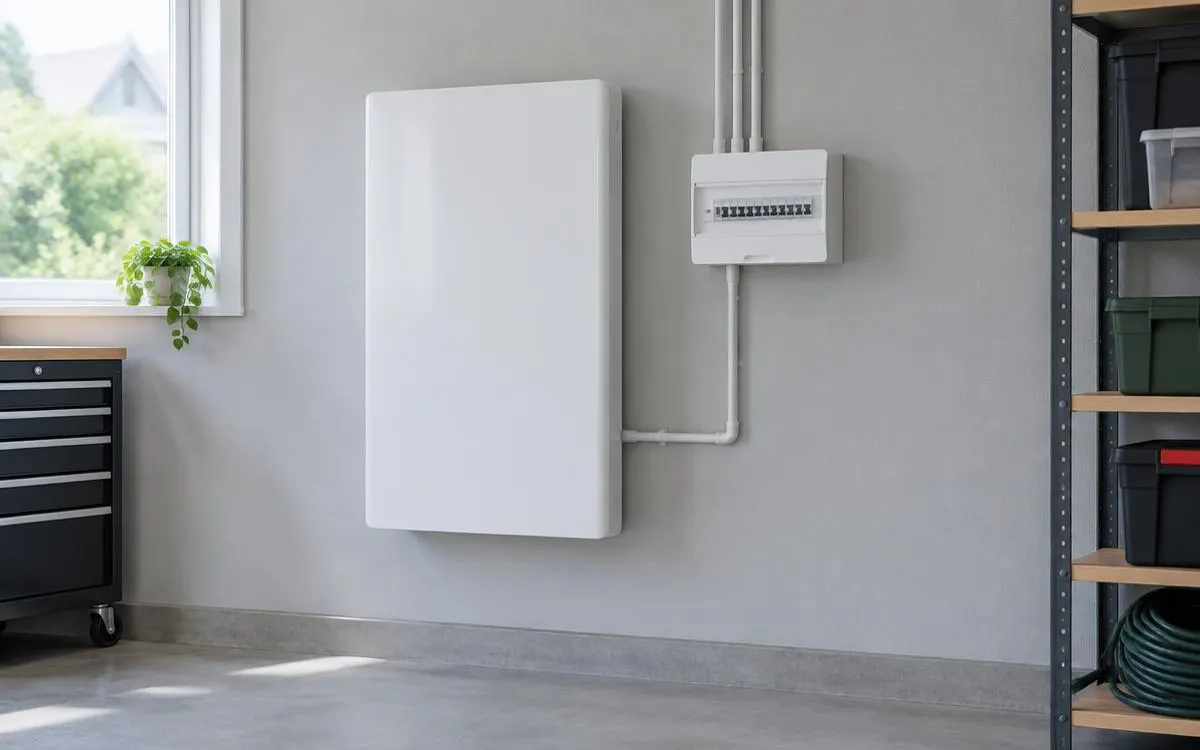
A home battery needs professional design and installation, even when the equipment arrives as a packaged unit. This guide is for households planning the work and checking handover. It outlines responsibilities from survey to commissioning without providing DIY electrical instructions. Agree the equipment, location and documents before work begins, then keep changes recorded throughout the project.
For the broader overview, read our guide: Residential Battery Options.
Independent guide. We are not a lender or a government body. Always check current scheme rules with the official provider.
1. Resolve the survey and location before work
The survey should consider existing electrical equipment, solar connections and how the household intends to use storage. Ask the installer to explain the proposed position against product instructions and applicable installation requirements. Access, ventilation and escape routes need consideration, not simply spare wall or floor space. Tell the installer about nearby stored items, heat sources or possible water exposure. Do not move the agreed position yourself after the design has been accepted.
Request a written installation scope naming the equipment and any supporting work. Ask who handles network operator notification or approval where needed and when those checks must occur. Agree access arrangements, disruption and any separately contracted work before setting a fitting date. Funding approval is a separate matter from equipment availability. Where a scheme requires a written offer before work, confirm that condition before paying for or scheduling the installation.
2. Leave electrical work and commissioning to professionals
Only a qualified installer should complete electrical connections and commission the battery system. Do not attempt self-installation, open the enclosure or copy connection instructions from another property. Ask how the installer checks protective controls and communication with existing equipment. Changes to the agreed configuration need explanation and updated documentation. A system that turns on is not the same as a complete, tested installation with its responsibilities and operating limits recorded.
At commissioning, request a demonstration of the functions included in your design. Check ordinary charging, discharging and monitoring using the owner-facing controls. If backup is part of the proposal, ask for an explanation of its actual scope and limitations. Do not assume every socket works during an outage. Ask what alerts mean and which actions belong to you rather than a professional. Keep these instructions available to other adults using the home.
- Agree the surveyed design and siting.
- Confirm network and funding responsibilities.
- Leave electrical fitting to the qualified installer.
- Observe the owner-facing commissioning demonstration.
- Check the documents and support contacts before completion.
3. Check certificates and the handover pack
Ask which electrical and scheme certificates apply to the work and when you will receive them. Request relevant MCS certification documents where applicable to the installation and funding route. Keep the final equipment list, manuals, warranty details and commissioning records together. Ask who registers products and whether you need to confirm that registration. Do not accept a generic leaflet as a replacement for the documents describing the actual system fitted at your home.
Confirm that app access belongs to you and that you can retrieve monitoring records. Ask the installer to show approved owner settings without revealing or changing protected controls. Record a fault contact and the process for arranging authorised updates or maintenance. Check that the area remains clear and the agreed installation position has not changed without explanation. Resolve missing documents in writing while the installer still has the project details readily available.
Checklist
- I have an agreed survey and installation scope.
- I know who handles network checks.
- I have not attempted electrical work myself.
- I have commissioning and certificate information.
- I have app access, manuals and fault contacts.
Frequently asked questions
Can I self-install my packaged battery?
No. Professional design, electrical installation and commissioning are needed. Packaged equipment does not remove the need for a qualified installer.
What should I ask about my network operator?
Ask whether notification or approval is required for the proposed arrangement, who handles it and what must happen before operation.
Which certificates should I expect at handover?
Ask the installer which electrical, MCS and funding documents apply. Keep the actual installation records rather than assuming every project uses the same pack.
Will my app setup complete the installation?
No. App access is one part of handover. Commissioning, protective checks, instructions, applicable certificates and support responsibilities also need completion.
So you can oversee a professional installation and receive clear operating instructions without attempting unsafe electrical work.
WHLS Editorial Team
Our editorial team writes independent, plain-English guides on home energy finance. We review guides when scheme rules change.
References
- Energy Saving Trust – Energy storage (opens in a new tab)
- GOV.UK – Domestic battery energy storage systems safety review (opens in a new tab)
- Energy Saving Trust – Off-grid (opens in a new tab)
- GOV.UK – Notice of approved grant categories and values for the Boiler Upgrade Scheme (opens in a new tab)
- Energy Saving Trust – Boiler Upgrade Scheme (opens in a new tab)
- MoneySavingExpert – Warm Homes Loan Scheme news (October 2026) (opens in a new tab)
- Financial Conduct Authority – Financial Services Register (opens in a new tab)
- MCS – Find an installer (opens in a new tab)
- Energy Saving Trust – Warm Homes: Local Grant guide (opens in a new tab)
- Home Energy Scotland – Grants and loans (opens in a new tab)
- MCS – Home Energy Scotland Grant and Loan (opens in a new tab)
- Energy Saving Trust – Welsh Government Nest scheme (opens in a new tab)
- Energy Saving Trust – Consumer protection (opens in a new tab)
- RECC – Renewable Energy Consumer Code (opens in a new tab)
- HIES – Home Insulation and Energy Systems (opens in a new tab)