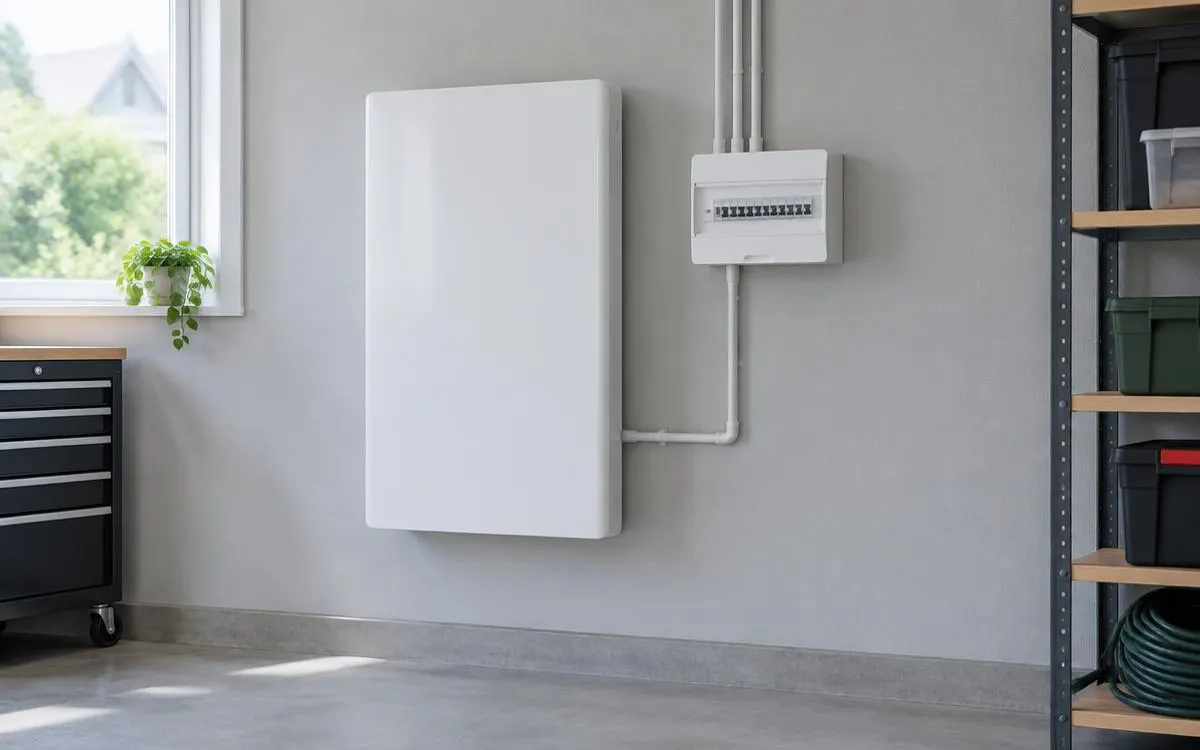
Equipment and installation protection are different agreements, so read both before choosing a battery. This guide is for households comparing quotes or preparing a warranty claim. It explains common measurement terms, conditions and support responsibilities without inventing product warranty lengths. Request the actual documents rather than relying on a sales summary about guaranteed performance.
For the broader overview, read our guide: Residential Battery Options.
Independent guide. We are not a lender or a government body. Always check current scheme rules with the official provider.
1. Separate manufacturer and workmanship cover
A manufacturer warranty concerns the equipment under its written terms, while workmanship cover concerns the installation work. They do not automatically cover the same fault, visit or associated expense. Ask who assesses a problem involving both the inverter and battery. Request clear responsibilities for diagnosis, labour, replacement equipment and any exclusions. Keep the exact models and installation record available, because a general warranty statement is not the contract for your fitted system.
Consumer-code protection sits alongside these product-specific documents rather than replacing them. The supplied consumer-protection facts include a workmanship warranty of at least two years and HIES insurance-backed guarantees. Check the installer’s current membership and the protection applying to your agreement. Ask for the certificate and claim route instead of assuming a logo proves every repair is insured. Manufacturer cover and insurance-backed workmanship protection should remain distinct entries in your comparison.
2. Understand the measurements and conditions
Battery warranty terms commonly use time, energy throughput or retained capacity to describe their limits. Throughput measures energy passing through the system under the manufacturer’s definition. Retained capacity describes remaining storage relative to the stated reference and assessment method. Ask whether the agreement ends at the first applicable limit or uses another condition. Do not interpret these terms as a promise that the battery will maintain unchanged performance under every household operating pattern.
Read registration, connectivity, firmware and servicing conditions before agreeing the purchase. Ask who registers the product and what evidence confirms completion. If online monitoring is required, clarify how an internet outage is handled under the written terms. Check whether approved installers must carry out particular work. A homeowner should not attempt internal repair to satisfy a maintenance obligation. Ask for the conditions in plain language, while keeping the full agreement as the record that governs a claim.
3. Prepare a usable claim and aftercare record
Keep the invoice, commissioning records, warranty documents and applicable protection certificates together. Record equipment identifiers from existing paperwork rather than opening the unit to find them. Ask the installer which monitoring evidence is useful if capacity or operation becomes a concern. Note fault dates and authorised service work without repeatedly resetting the system. A well-organised record supports assessment but does not mean every fault or performance change qualifies for free repair under every agreement.
Before signing, ask what happens if the installer stops trading or the equipment supplier changes its support arrangements. Check whether protection transfers when the property changes hands and who must update registration. Request written answers about call-outs, transport and exclusions without assuming they are included. If a claim is disputed, ask for the decision and relevant term in writing. Use the appropriate manufacturer, installer or consumer-code process instead of treating all protection as one interchangeable guarantee.
Checklist
- I have separate equipment and workmanship documents.
- I have checked consumer-code protection certificates.
- I understand time, throughput and capacity conditions.
- I know who completes registration and updates.
- I have records and the correct claim contacts.
Frequently asked questions
Does my manufacturer warranty cover poor installation?
Do not assume this. Equipment and workmanship cover have different scopes. Ask who handles diagnosis and claims involving the installation.
What does throughput mean in my warranty?
It measures energy passing through the system under the stated definition. Read how that limit interacts with time and retained-capacity conditions.
What workmanship protection should I ask about?
Check the applicable consumer code. The supplied facts include at least two years of workmanship cover and HIES insurance-backed guarantees; request actual certificates.
Can I ignore my registration or online conditions?
No. Read the agreement and ask how registration, connectivity and approved maintenance are handled. Keep confirmation that required steps were completed.
So you can compare real protection and prepare a claim without confusing equipment, workmanship and insurance-backed cover.
WHLS Editorial Team
Our editorial team writes independent, plain-English guides on home energy finance. We review guides when scheme rules change.
References
- Energy Saving Trust – Energy storage (opens in a new tab)
- GOV.UK – Domestic battery energy storage systems safety review (opens in a new tab)
- Energy Saving Trust – Off-grid (opens in a new tab)
- GOV.UK – Notice of approved grant categories and values for the Boiler Upgrade Scheme (opens in a new tab)
- Energy Saving Trust – Boiler Upgrade Scheme (opens in a new tab)
- MoneySavingExpert – Warm Homes Loan Scheme news (October 2026) (opens in a new tab)
- Financial Conduct Authority – Financial Services Register (opens in a new tab)
- MCS – Find an installer (opens in a new tab)
- Energy Saving Trust – Warm Homes: Local Grant guide (opens in a new tab)
- Home Energy Scotland – Grants and loans (opens in a new tab)
- MCS – Home Energy Scotland Grant and Loan (opens in a new tab)
- Energy Saving Trust – Welsh Government Nest scheme (opens in a new tab)
- Energy Saving Trust – Consumer protection (opens in a new tab)
- RECC – Renewable Energy Consumer Code (opens in a new tab)
- HIES – Home Insulation and Energy Systems (opens in a new tab)