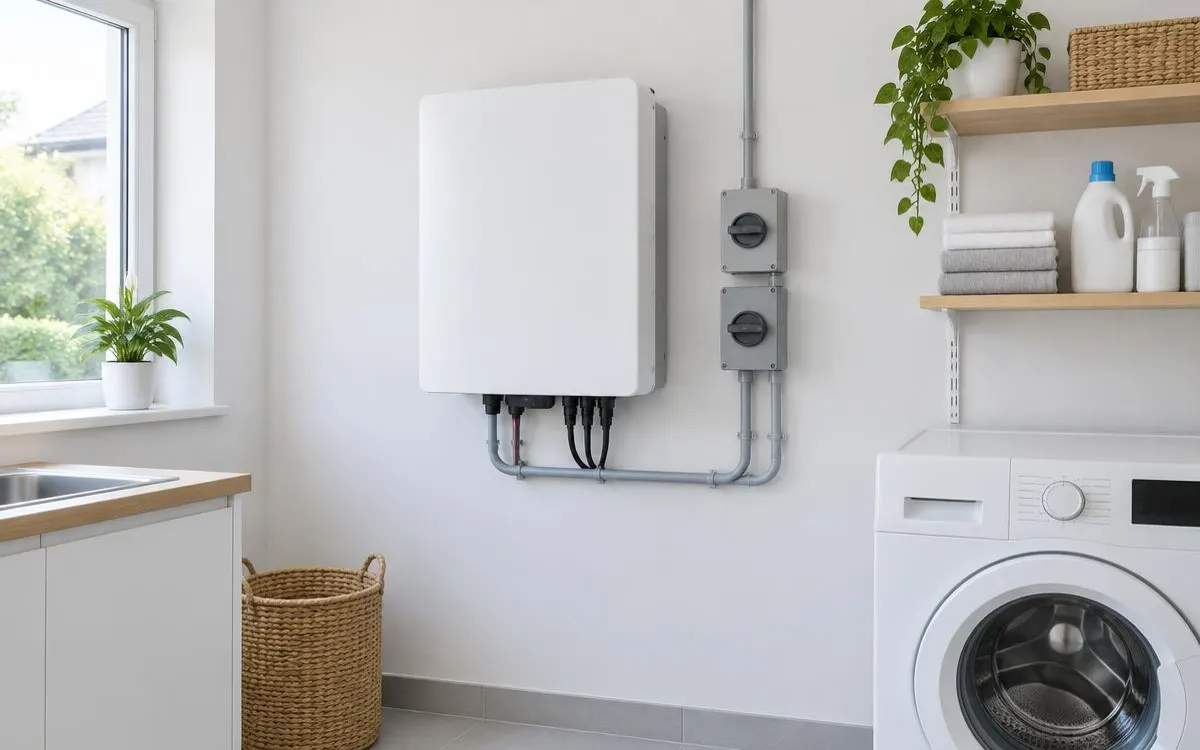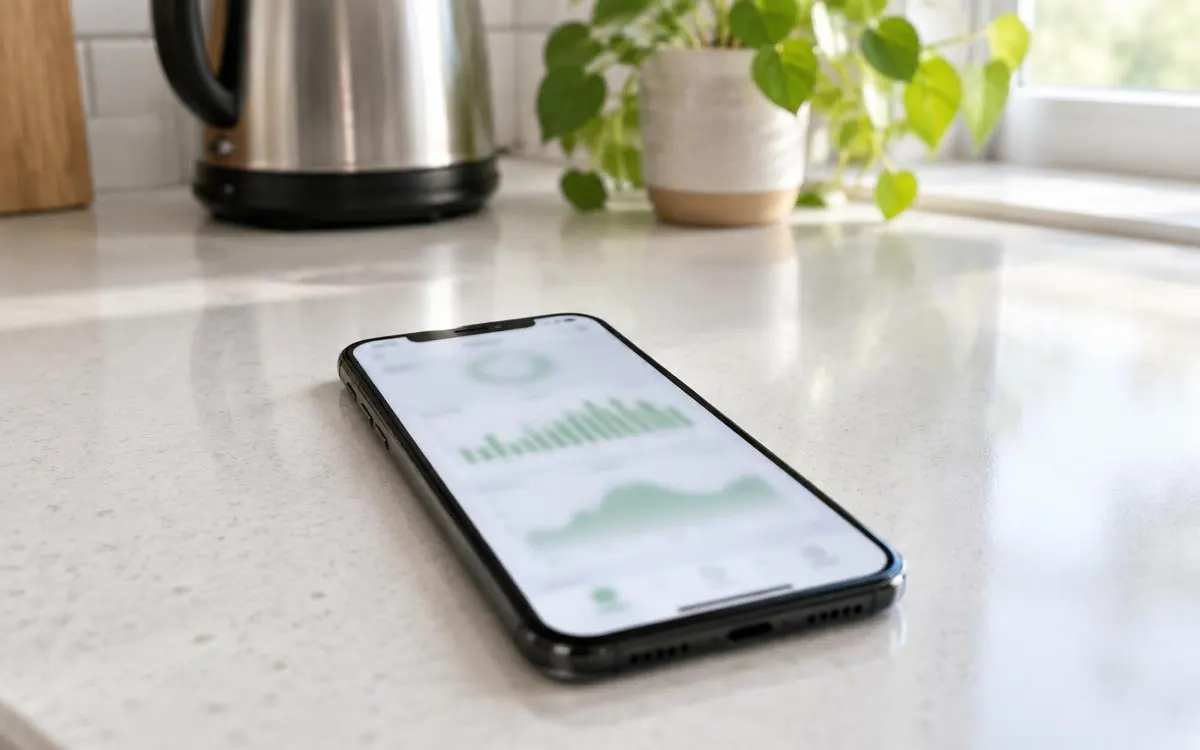
Start with your household’s actual electricity use before changing battery schedules or app settings. This guide is for owners reviewing how storage fits solar and tariff arrangements. It explains practical scheduling questions without promising lower bills or naming suppliers. Keep changes within approved owner controls and ask the installer about settings that affect safety or backup.
For the broader overview, read our guide: Energy Storage Solutions.
Independent guide. We are not a lender or a government body. Always check current scheme rules with the official provider.
1. Review solar generation and household timing
Use the available monitoring records to see when solar generation and household demand overlap. A battery stores available energy for later use within its capacity and power limits. Ask the installer to explain how the existing schedule prioritises household use and charging. Do not assume every change in stored energy is a fault or that the system can capture all generation. Separate observed patterns from predictions before deciding which owner settings need review.
Consider whether routine appliance use can move to a more suitable time without disrupting the household. Keep appliance safety instructions and ordinary supervision requirements unchanged. Scheduling should not mean running unsafe or unattended equipment simply to use stored electricity. Compare the effect on the complete household pattern rather than one isolated app reading. If a planned heat pump or vehicle charger changes demand, ask the installer to reassess the control priorities and equipment limits.
2. Assess the complete tariff and reserve arrangement
A time-of-use tariff has different charges at different periods under the supplier’s terms. Ask whether your equipment supports the proposed schedule and how import and export arrangements interact. Check restrictions on stored energy before assuming every charging or export pattern is permitted. An advertised low charging period is not the whole contract. Keep the household’s other electricity use visible and ask the supplier for an explanation of the complete terms that apply to you.
Reserve settings retain energy for an intended purpose where the system supports that feature. If backup matters, ask how the reserve relates to the circuits and loads included in the design. Do not remove a protective limit or assume a larger reserve creates whole-home backup. Ask which controls are owner-accessible and how changes affect normal charging and discharge. Record agreed settings so an installer can interpret future behaviour without guessing what was changed.
3. Make small approved changes and review seasons
Solar availability and household use vary through the seasons, so one schedule need not suit every pattern. Review monitoring records before asking for a change rather than copying another owner’s settings. Confirm whether approved automatic controls already account for relevant conditions. Keep a record of authorised changes and the household circumstances they address. Do not install unofficial software or alter internal management controls in pursuit of a more favourable app display.
After an approved adjustment, compare ordinary operation with the intended purpose and report repeated unexpected behaviour. Ask the installer to explain alerts or persistent restrictions rather than forcing the system to charge. Maintain clear surroundings and follow the manufacturer’s update process while reviewing schedules. Recheck supplier terms when the contract changes. Optimisation remains a household planning exercise within documented equipment limits, not a guarantee that every additional battery cycle produces a financial benefit.
Checklist
- I have reviewed generation and household records.
- I schedule appliances without changing safety rules.
- I have checked full import and export terms.
- I understand approved reserves and backup scope.
- I record changes and review seasonal patterns.
Frequently asked questions
Should I copy my neighbour’s battery schedule?
No. Generation, demand, tariffs and equipment differ. Review your records and ask the installer which settings fit your own arrangement.
Can I charge my battery during a lower-priced period?
Ask whether your equipment and supplier terms support that pattern. Assess the whole tariff, including other consumption and relevant export conditions.
Should I remove my reserve to increase everyday use?
Ask what the reserve does and which changes are permitted. Do not bypass protective limits or undermine a backup arrangement you need.
Do I need to change my settings every season?
Not automatically. Review actual patterns and existing controls, then ask whether an approved adjustment is useful for your household.
So you can review storage schedules around real household needs while keeping tariff conditions and safe controls clear.
WHLS Editorial Team
Our editorial team writes independent, plain-English guides on home energy finance. We review guides when scheme rules change.
References
- Energy Saving Trust – Energy storage (opens in a new tab)
- GOV.UK – Domestic battery energy storage systems safety review (opens in a new tab)
- Energy Saving Trust – Off-grid (opens in a new tab)
- GOV.UK – Notice of approved grant categories and values for the Boiler Upgrade Scheme (opens in a new tab)
- Energy Saving Trust – Boiler Upgrade Scheme (opens in a new tab)
- MoneySavingExpert – Warm Homes Loan Scheme news (October 2026) (opens in a new tab)
- Financial Conduct Authority – Financial Services Register (opens in a new tab)
- MCS – Find an installer (opens in a new tab)
- Energy Saving Trust – Warm Homes: Local Grant guide (opens in a new tab)
- Home Energy Scotland – Grants and loans (opens in a new tab)
- MCS – Home Energy Scotland Grant and Loan (opens in a new tab)
- Energy Saving Trust – Welsh Government Nest scheme (opens in a new tab)
- Energy Saving Trust – Consumer protection (opens in a new tab)
- RECC – Renewable Energy Consumer Code (opens in a new tab)
- HIES – Home Insulation and Energy Systems (opens in a new tab)