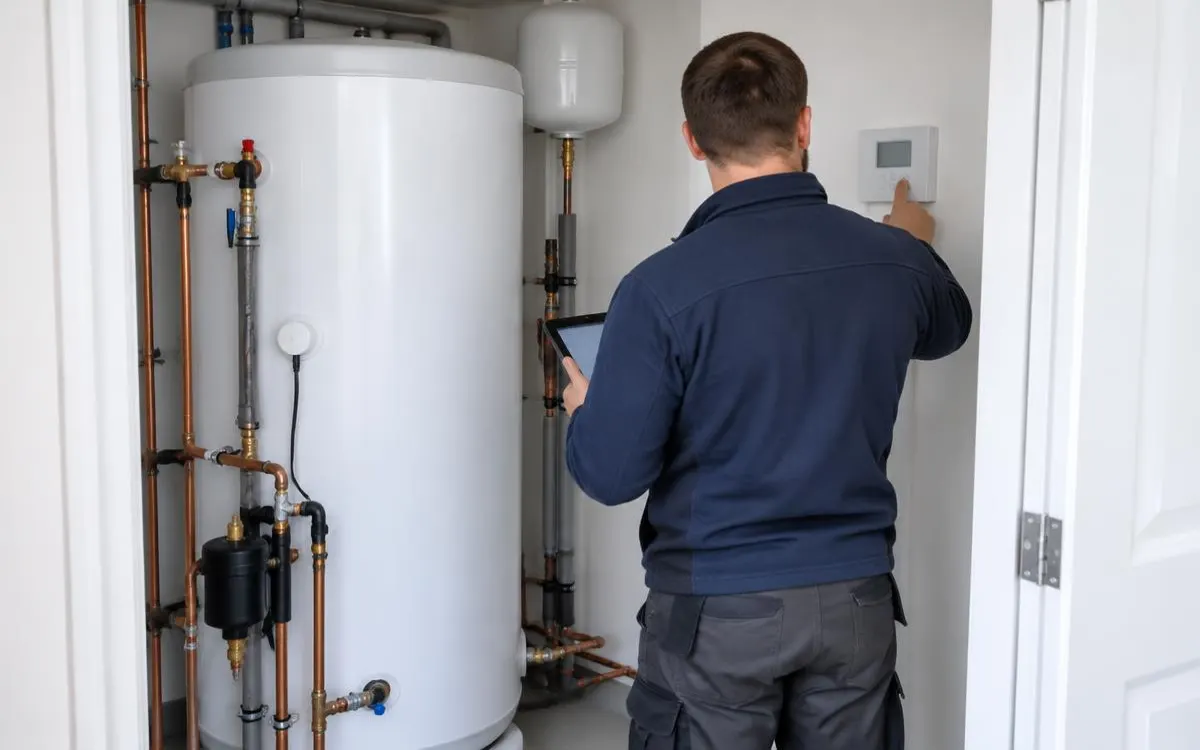
Check grant support before deciding how to pay for the remaining heat pump installation work. This guide is for homeowners choosing between savings, borrowing and available funding routes. It separates national grant conditions from loan limits and household budgeting decisions. A grant reduces eligible spending, while a loan creates repayment commitments that need their own careful comparison.
For the broader overview, read our guide: Air Source Heat Pump Cost Factors and Financing Options.
Independent guide. We are not a lender or a government body. Always check current scheme rules with the official provider.
1. Check grant routes for your nation
The Boiler Upgrade Scheme supports eligible heat pump installations in England and Wales. Air-to-water and ground source grants are £7,500, or £9,000 when replacing oil or LPG in an off-gas-grid home. The air-to-air grant is £2,500. Your MCS-certified installer applies on your behalf and deducts the grant from the bill. Confirm the complete rules through GOV.UK before relying on a proposed deduction.
Home Energy Scotland offers up to £7,500 grant funding with an interest-free loan up to a further £7,500. A £1,500 remote rural uplift applies under its rules. MCS installation is required, funding is first-come, and work must not start before the written offer. Eligible low-income households in England should also check Warm Homes: Local Grant. Its separate low-carbon heating category provides up to £15,000, subject to the scheme’s conditions.
2. Compare the remaining payment routes
The table separates funding categories rather than predicting which provider will accept your application. Do not add every listed amount together as if they form a single entitlement. Ask the relevant schemes about permitted combinations before making a commitment. Identify your actual installation total, any approved grant and the amount still payable. That remaining contribution is the starting point for comparing savings with borrowing.
Warm Homes Loan maximums differ by heat pump type and do not represent installation prices. The scheme permits combination with Boiler Upgrade Scheme support. Eligibility rules, application arrangements and lender rates remain unconfirmed at the stated review date. Installer finance is a separate offer that needs its own lender and contract checks. Ask for the total cost of credit rather than comparing monthly payments alone.
| Option | Nation | Type | What to check |
|---|---|---|---|
| Boiler Upgrade Scheme | England and Wales | Grant | Air-to-water or ground source: £7,500; £9,000 when replacing off-gas oil or LPG. Air-to-air: £2,500. |
| Home Energy Scotland | Scotland | Grant and interest-free loan | Up to £7,500 grant plus up to £7,500 loan; £1,500 remote rural uplift. |
| Warm Homes: Local Grant | England | Grant | Up to £15,000 extra for low-carbon heating; household and property tests apply. |
| Warm Homes Loan | Check published rules | Loan | Air-to-water £20,000; air-to-air £10,000; ground source £35,000 maximums. |
| Installer finance | Provider-dependent | Loan | Check lender, total cost of credit and repayment conditions. |
| Savings | Your household | Own funds | Compare your remaining contribution and other household commitments. |
3. Match commitments to your household budget
Using savings avoids a new credit agreement but still requires a complete project budget. Consider preparatory work, ongoing servicing and other household commitments alongside the remaining installation bill. Do not spend against a grant that has not been approved or assume a future loan will be available. Ask for clear payment stages tied to the agreed work. Keep written funding decisions with your contract and itemised quotation.
If you consider finance, check the lender on the FCA register and examine the agreement carefully. Ask whether borrowing is secured against your home and what happens if repayments become difficult. Compare the complete repayable amount and any conditions affecting early repayment. Avoid pressure to sign alongside an installation discount. A suitable payment route needs understandable commitments, not simply a smaller initial payment.
Checklist
- I have checked grants for my nation first.
- I have an itemised installation total and approved deduction.
- I understand that loan limits are not prices.
- I have checked any lender and complete credit terms.
- I have retained written funding and payment decisions.
Frequently asked questions
Should I check my grant before borrowing?
Yes. Establish eligible support and the remaining contribution before choosing credit. Do not assume approval or permitted combinations without scheme confirmation.
Can I combine my Warm Homes Loan with BUS?
The published scheme allows combination with Boiler Upgrade Scheme support. Warm Homes Loan eligibility, application arrangements and lender rates remain unconfirmed.
Can I start my Scottish project before an offer?
No. Home Energy Scotland requires the written offer before work starts. Confirm the offer conditions and installation sequence with the scheme.
How should I compare my installer finance offer?
Check the lender, total cost of credit, security and repayment terms. Compare financing separately from the quality and scope of the proposed installation.
So you can check grants first and choose a payment route with its commitments clearly understood.
WHLS Editorial Team
Our editorial team writes independent, plain-English guides on home energy finance. We review guides when scheme rules change.
References
- Energy Saving Trust – Air source heat pumps (opens in a new tab)
- GOV.UK – Apply for the Boiler Upgrade Scheme (opens in a new tab)
- GOV.UK – Notice of approved grant categories and values for the Boiler Upgrade Scheme (opens in a new tab)
- Energy Saving Trust – Boiler Upgrade Scheme (opens in a new tab)
- MoneySavingExpert – Warm Homes Loan Scheme news (October 2026) (opens in a new tab)
- Financial Conduct Authority – Financial Services Register (opens in a new tab)
- MCS – Find an installer (opens in a new tab)
- Energy Saving Trust – Warm Homes: Local Grant guide (opens in a new tab)
- Home Energy Scotland – Grants and loans (opens in a new tab)
- MCS – Home Energy Scotland Grant and Loan (opens in a new tab)
- Energy Saving Trust – Welsh Government Nest scheme (opens in a new tab)
- Energy Saving Trust – Consumer protection (opens in a new tab)
- HIES – Home Insulation and Energy Systems (opens in a new tab)
- Planning Portal – Heat pumps (opens in a new tab)