Unexpected spending often starts with an installation quote that leaves responsibilities unclear. This guide is for homeowners checking what sits outside the headline equipment and fitting total. It separates survey-dependent building work from ongoing ownership commitments. Not every home needs every item, so ask your installer which exclusions actually apply to your proposed system.
For the broader overview, read our guide: Air Source Heat Pump Cost Factors and Financing Options.
Independent guide. We are not a lender or a government body. Always check current scheme rules with the official provider.
1. Check indoor changes and preparation
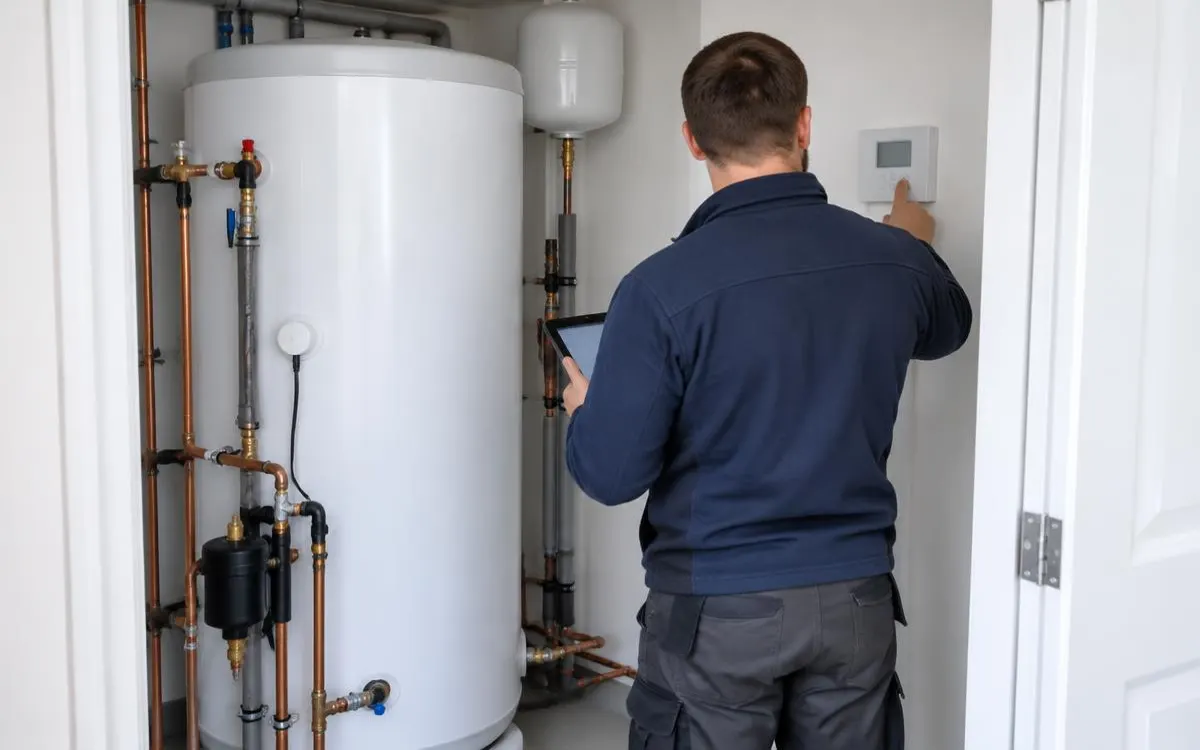
Ask which existing radiators and pipes suit the proposed heating design before agreeing equipment. The installer should explain any changes using the survey, rather than presenting upgrades as automatic extras. Discuss the hot-water cylinder and the space needed for installation, access and maintenance. Ask whether cupboards, pipe routes or other fittings need alteration. Record who organises that work and whether another contractor will quote separately.
Insulation improvements can affect the heating design, so discuss their place in the project sequence. Ask the installer which recommended improvements are assumptions behind the proposed specification. Do not treat every suggested measure as a mandatory purchase or a universal grant condition. If you plan improvements first, request confirmation that the final design reflects them. Keep related quotations alongside the main proposal to avoid overlooking part of the project.
2. Confirm electrical, outdoor and building work
The electrical supply and proposed connections need an assessment appropriate to your property. Ask the installer to explain any supply upgrade or additional electrical work before you commit. Confirm who handles enquiries with the relevant supplier or network operator where required. Request an agreed outdoor position and any base or access arrangements. A clear drawing or written description makes these responsibilities easier to compare across installers.
Pipework can leave surfaces needing repair, decoration or other making good after installation. Ask whether the quote includes those jobs and how the installer defines a finished installation. Check planning requirements with the relevant authority where your site or proposal needs particular consideration. Do not rely on a general assurance that every property follows the same rules. Keep permission-dependent work separate from promises about an installation date.
- Ask for survey-based reasons for each proposed extra.
- Confirm who carries out electrical and building work.
- Check planning responsibilities before agreeing the schedule.
3. Allow for responsibilities after handover
Manufacturer warranties commonly require servicing, but the actual conditions depend on the product and agreement. Ask for the service requirements and any proposed service plan costs in writing. Check who handles faults and whether labour, travel or supporting equipment sits outside a quoted service package. Keep servicing obligations distinct from the installer’s workmanship protection. Never assume an installation warranty covers every future visit or repair.
A tariff change is another decision to assess, not an automatic condition of installing a heat pump. Ask how your household use and controls fit any tariff being suggested. Compare the complete terms without relying on an advertised saving or a predicted bill. Record ongoing commitments alongside the immediate installation work. If a salesperson cannot explain an exclusion, request a written answer before paying or signing.
Checklist
- I have checked radiator, cylinder and insulation assumptions.
- I know who handles electrical upgrades and making good.
- I have confirmed outdoor siting and planning checks.
- I have written servicing and warranty conditions.
- I have assessed any tariff suggestion separately.
Frequently asked questions
Will my home need every extra listed here?
No. These are questions to resolve through your survey and quotation. Ask which items apply and which are optional for your design.
Can my existing cylinder remain?
Ask the installer to assess its suitability for the proposed system. Request an explanation of any replacement, space requirements and associated work.
Do I need annual servicing for my warranty?
Annual servicing is commonly required, but check your manufacturer’s written conditions. Ask who can carry out the service and what records you must retain.
Should I change my tariff straight away?
Assess the terms against your household electricity use and heating controls. A suggested tariff is not evidence of a guaranteed reduction in bills.
So you can identify project exclusions and ownership commitments before they become unexpected spending.
WHLS Editorial Team
Our editorial team writes independent, plain-English guides on home energy finance. We review guides when scheme rules change.
References
- Energy Saving Trust – Air source heat pumps (opens in a new tab)
- GOV.UK – Apply for the Boiler Upgrade Scheme (opens in a new tab)
- GOV.UK – Notice of approved grant categories and values for the Boiler Upgrade Scheme (opens in a new tab)
- Energy Saving Trust – Boiler Upgrade Scheme (opens in a new tab)
- MoneySavingExpert – Warm Homes Loan Scheme news (October 2026) (opens in a new tab)
- Financial Conduct Authority – Financial Services Register (opens in a new tab)
- MCS – Find an installer (opens in a new tab)
- Energy Saving Trust – Warm Homes: Local Grant guide (opens in a new tab)
- Home Energy Scotland – Grants and loans (opens in a new tab)
- MCS – Home Energy Scotland Grant and Loan (opens in a new tab)
- Energy Saving Trust – Welsh Government Nest scheme (opens in a new tab)
- Energy Saving Trust – Consumer protection (opens in a new tab)
- HIES – Home Insulation and Energy Systems (opens in a new tab)
- Planning Portal – Heat pumps (opens in a new tab)