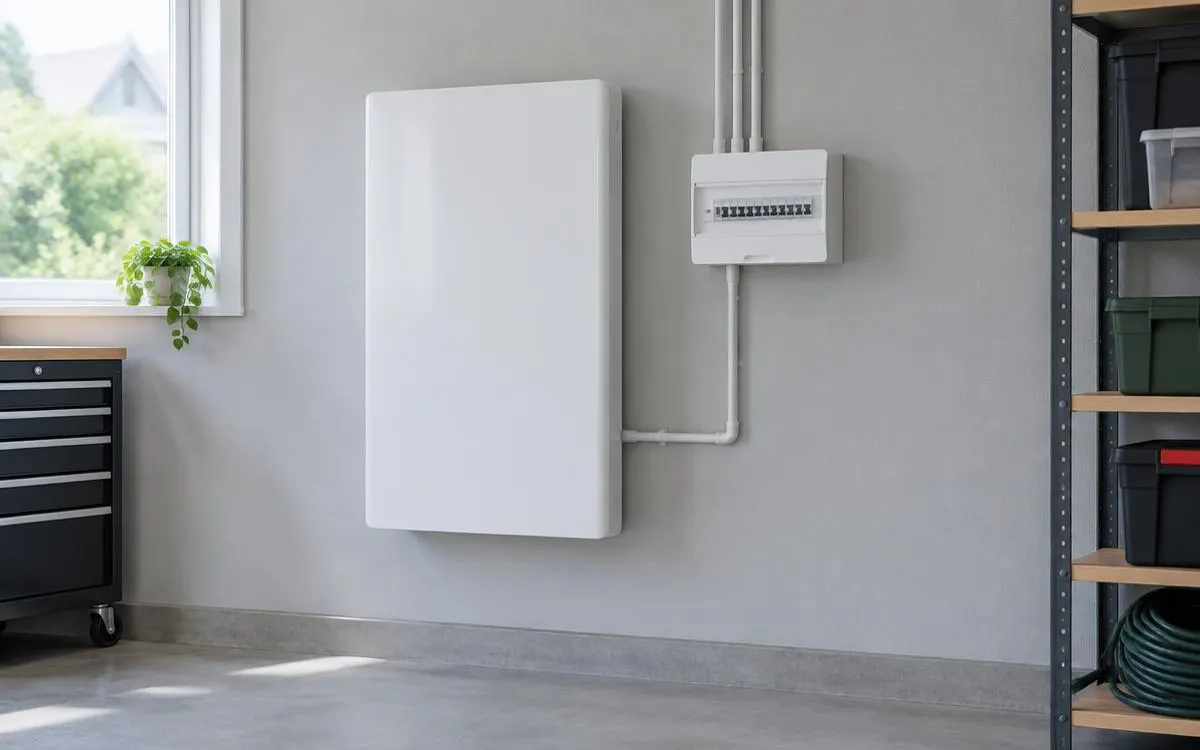
The right storage size follows household use and the proposed design, not a universal capacity recommendation. This guide is for owners asking why an installer has chosen a particular battery. It explains the evidence to gather and the assumptions to check. Keep storage capacity, delivery power and future expansion separate when reviewing the written proposal.
For the broader overview, read our guide: Residential Battery Options.
Independent guide. We are not a lender or a government body. Always check current scheme rules with the official provider.
1. Gather household and solar evidence
Collect a year of available bills and smart meter information to show seasonal use as well as ordinary daily patterns. Ask the installer which records are useful and whether gaps need explanation. A bill total alone does not show when electricity is used. Note evening demand, regular appliance schedules and periods when the home is empty. Do not replace missing evidence with a generic household assumption without asking how that uncertainty affects the proposed design.
If solar is installed, gather generation records and details of the existing inverter. Explain how much household use overlaps with production rather than treating all generated energy as available for storage. Ask the installer to show how seasonal differences enter the assessment. A larger unit does not create additional generation. Keep the capacity proposal connected to the actual charging opportunities and later demand, while recording which parts of the explanation rely on estimates instead of measured information.
2. Separate capacity, power and future plans
Usable capacity concerns the energy available within the approved operating range. Power concerns the rate at which the system charges or supplies loads. Ask the installer to explain both against your expected use and any backup arrangement. A unit can hold useful energy without supporting every appliance simultaneously. Do not judge the whole design from a storage figure alone. Request consistent definitions if one quote lists total capacity and another lists usable capacity.
Tell the installer about planned heat pumps, vehicle charging or major occupancy changes before accepting the size. These plans affect demand, but they do not justify assuming the battery must supply every future load. Ask for the current household case and a clearly separate future scenario. Check how the proposal handles overlapping use and generation. An expansion plan needs compatible equipment and support, not simply an assurance that extra storage can always be added later.
3. Question the proposal before committing
Ask the installer to explain why the proposed capacity fits your evidence and which alternatives were considered. Request the relevant charging, discharge and reserve assumptions in writing. If another firm suggests a substantially different size, compare the briefs before treating either as incorrect. They should be working from the same household records and intended use. A useful design explanation is more persuasive than a statement that a standard package suits most homes.
Check whether expandable equipment remains supported with the proposed inverter and control arrangement. Ask what additional survey, installation work or warranty conditions would apply to later additions. Avoid buying unnecessary storage solely because future expansion sounds inconvenient. Keep your final size decision alongside the evidence and installer answers. The aim is an explained installation within documented limits, not a promise that a particular capacity will remove grid use or deliver a fixed financial result.
Checklist
- I have household bills and smart meter patterns.
- I have checked solar generation and inverter details.
- I understand usable capacity and delivery power.
- I have separated current use from future plans.
- I have written sizing and expansion explanations.
Frequently asked questions
Can I size my battery from one electricity bill?
A single bill gives limited context. Gather a year of available records and timing information so the installer can consider seasonal and daily patterns.
Does my larger battery always capture more useful solar?
Not automatically. Available generation, existing daytime use and later demand need assessment alongside operating limits.
Should my future vehicle determine the entire design now?
Ask for separate current and future scenarios. Check charging patterns, overlapping loads and expansion compatibility before choosing equipment.
What should I ask when my quotes suggest different sizes?
Confirm that both firms used the same brief and records. Request their capacity, power and reserve assumptions in writing.
So you can question a sizing proposal using household evidence instead of accepting a generic storage recommendation.
WHLS Editorial Team
Our editorial team writes independent, plain-English guides on home energy finance. We review guides when scheme rules change.
References
- Energy Saving Trust – Energy storage (opens in a new tab)
- GOV.UK – Domestic battery energy storage systems safety review (opens in a new tab)
- Energy Saving Trust – Off-grid (opens in a new tab)
- GOV.UK – Notice of approved grant categories and values for the Boiler Upgrade Scheme (opens in a new tab)
- Energy Saving Trust – Boiler Upgrade Scheme (opens in a new tab)
- MoneySavingExpert – Warm Homes Loan Scheme news (October 2026) (opens in a new tab)
- Financial Conduct Authority – Financial Services Register (opens in a new tab)
- MCS – Find an installer (opens in a new tab)
- Energy Saving Trust – Warm Homes: Local Grant guide (opens in a new tab)
- Home Energy Scotland – Grants and loans (opens in a new tab)
- MCS – Home Energy Scotland Grant and Loan (opens in a new tab)
- Energy Saving Trust – Welsh Government Nest scheme (opens in a new tab)
- Energy Saving Trust – Consumer protection (opens in a new tab)
- RECC – Renewable Energy Consumer Code (opens in a new tab)
- HIES – Home Insulation and Energy Systems (opens in a new tab)